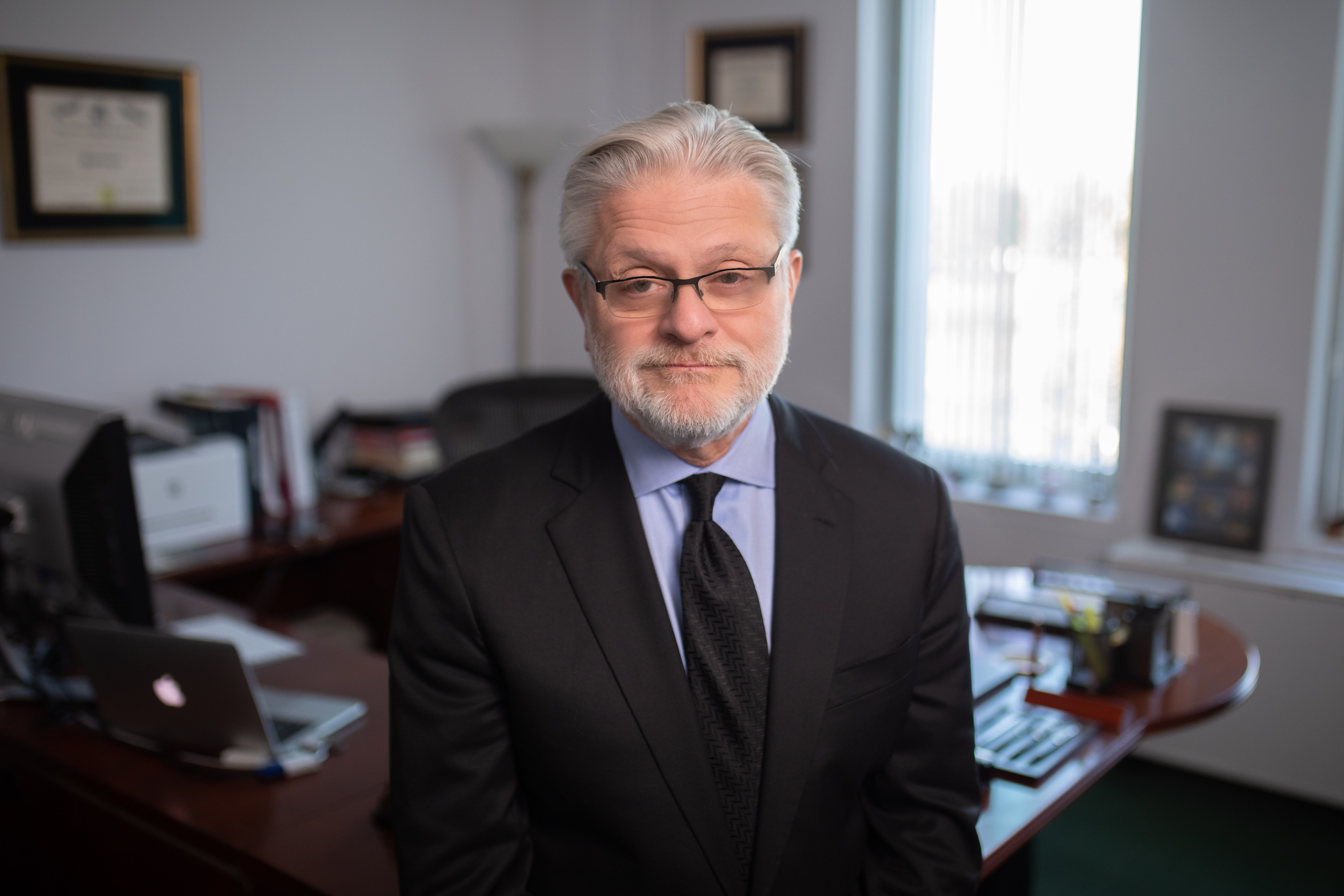
With nearly four decades of experience in academic medical center systems as a clinician, educator, and executive, Frank A. Ghinassi, PhD, ABPP serves as President and CEO of Rutgers Health University Behavioral Health Care. Having also spent much of his career involved in executive coaching—including as an executive coach for the internationally located Center for Creative Leadership—Dr. Ghinassi joined the Rutgers Leadership Coaching for Organizational Performance (LCOP) program in 2025, where he saw an opportunity to familiarize himself with new advances in coaching models and certification. We spoke with Dr. Ghinassi about his LCOP experience, his approach to leadership, and what continues to inspire his commitment to coaching.
“A leader should be able to communicate to every individual in the organization that what they each contribute is critical to the success of the overall mission.”
What inspired you to join the Rutgers LCOP program?
The more I learned about [LCOP], the more I believed that not only was it going to be helpful in acquiring a new credential for executive coaching, but also, in and of itself, it presented a valuable opportunity to reexamine and refresh my coaching techniques and style within a classroom of like-minded individuals.
What was the biggest lesson or insight you gained from the program?
One of the things that really struck me about this new programmatic approach was the emphasis on coaching as a means of exploring growth and development in the individual who's being coached, along with a unique and focused approach on the specific goals for self-development as they are uniquely defined at the start of each session.
The program did a great job of translating an overarching developmental career goal into one-hour coaching sessions ensuring each hour was a meaningful, incremental step toward achieving the broader goal. While that sounds simple, I believe LCOP helped me understand the complexity and benefit of delivering on that process.
How has LCOP influenced the way you lead?
LCOP helped provide a new lens through which I could look at the way I lead. A great example has been that even now, and here I am close to a year away from when I had finished the program, I take renewed energy in my interactions with individuals by making it clear, perhaps more than I used to, what it is we're trying to accomplish together in the specific moments of our interactions.
What's the purpose of the hour we're spending together? What do we want to walk away with as the product of this hour together? How can we measure the progress that we made today?
The program helps to remind and reinforce the importance of identifying ahead of time: what's the product we want to walk away with from this meeting?
What does effective leadership mean to you?
There is a natural progression from individual contributor, to manager, to leader. For me, that step to leader moved me further away from day-to-day operations to a focus on the larger strategic direction and mission. A leader provides an environment conducive to formulating and executing that organizational strategic direction.
A key responsibility of a leader is to make sure each individual within the organization believes that their contributions to the enactment of a strategic vision is critical. A leader should be able to communicate to them why what they do is critical to the overall success.
What advice would you give someone considering enrolling in LCOP?
It's important to ask yourself up front: what is it I plan to do with this learning opportunity? Is this going to make me a better coach? Is it going to make me a better individual contributor, manager, or leader? Is it going to make me a better entrepreneur? What’s my motivation for participating?
This program asks you to take real-life with which you’re currently grappling and bring those into the classroom. If you come into the course knowing what you'd like to focus on and what things about your own career you want LCOP to help you improve, you can use that motivation in the learning itself. It makes the learning more meaningful and impactful.
What has inspired your lifelong commitment to coaching?
The fundamental human condition, at least as I've experienced it, is how do you work to make the world in which we all live a better place?
I've had the privilege and the benefit of having been exposed in my life to family, teachers, supervisors, and leaders who have instilled values and have involved me in missions bigger than myself.
The inspiration is how do I serve that role for others, and how do I pay that forward?
What are you most excited about in your leadership journey?
What we do in academic healthcare isn’t static, it’s dynamic in that we must continually adapt to changes in societal needs, values, priorities, current geopolitical events, financially shifts and all of the local, national and international realities that impact the lives of the people and families we serve.
That’s what makes leadership exciting, if I’m going to continue to execute to best of my ability and help others do the same, I'm going to need to continuously adapt and change—and for me, that keeps the challenges, the struggle, and the progress fresh.